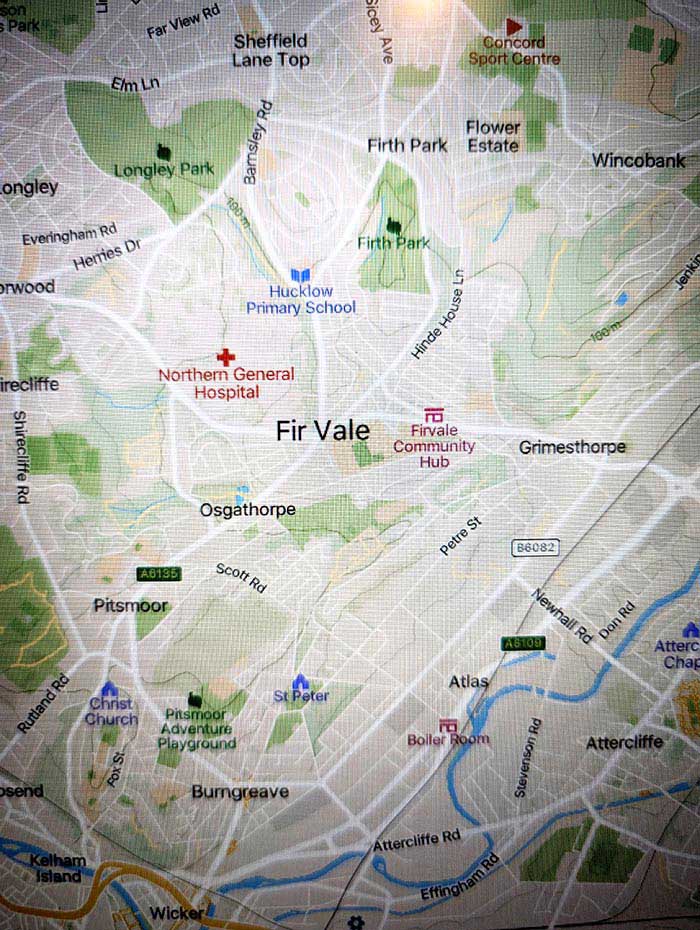
At first glance Firth Park FC, formed in 1862, appear to be an anomaly in the ‘Youdan Club’, an unlikely gentleman’s association formed in the heart of working-class Sheffield. However, the Fir Vale of 1862 was a different entity to the suburb of today. Most of the historic buildings, extant or otherwise, that we associate with the area, the Northern General Hospital, St Cuthberts and even the workhouse which evolved into the hospital, were constructed after 1862.
In 1862 Fir Vale was a semi-rural community clustered around a series of old Norse settlements like Skinnerthorpe (which would be subsumed by Fir Vale) Oggasthorpe sand Grimesthorpe. Fir Vale was named after a house according to Peter Harvey’s definitive collection of Sheffield names, and as there were no fir trees in the vale, ‘Fir’ is thought to be a corruption of ‘furze’ or gorse.
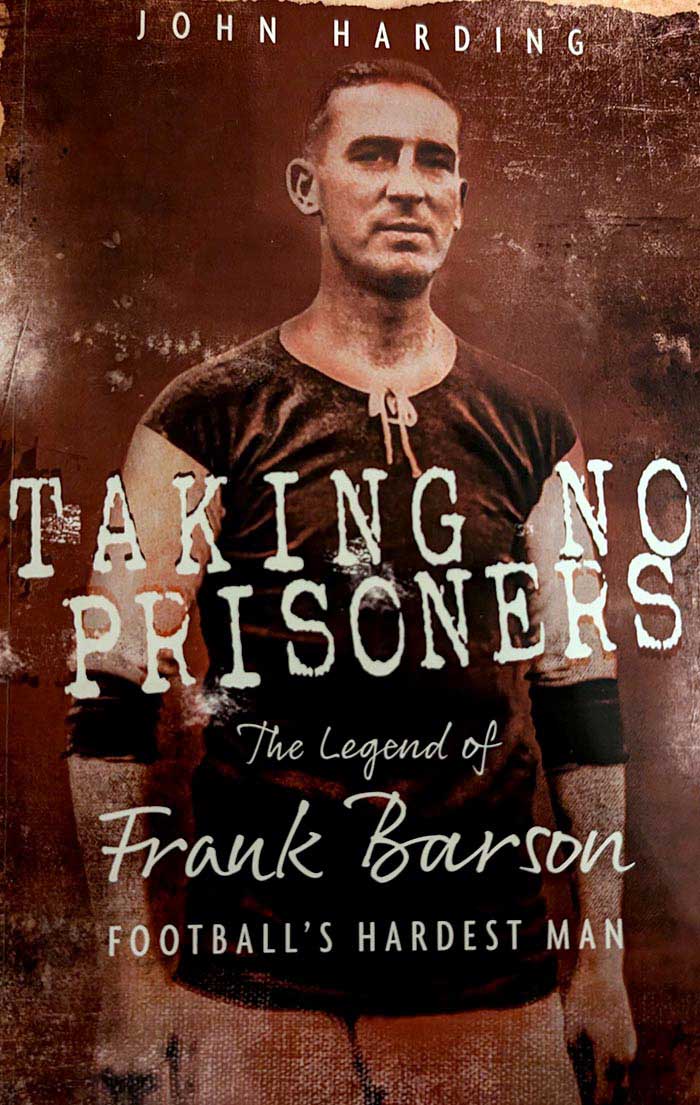
Folk football with variable rules is recorded in old newspaper reports about the area. Young men were receiving fines for playing football on the Barnsley Road, a turnpike dating from 1790, in the 1840’s. The area’s most famous footballing export was born after the rural idyll had been transformed by the industrialisation of the steel industry. Frank Barson was a star of the 1920’s. He came from a Derbyshire farming family that relocated to Grimesthorpe. Barson was known as ‘football’s hardest man’ and the ex-Villa and Manchester United man, a super star of his day, would have been a standout enforcer in any era.
The club had friends in high places. The Frith family distributed prizes after annual athletics events at the Newhall Gardens, most of which were donated by Mr Thomas Youdan himself, and a member of the famous knifemaking clan of Rogers, was a ‘starter’ during athletic events. It was undoubtedly a club for a monied elite, if not necessarily ‘gentlemen’. With a subscription fee of 2 shillings and sixpence (with £1 valued at £141 in today’s money) it was beyond the reach of the average working man, especially as members were expected to fund their own kit. Players would have almost certainly have belonged to cricket clubs, and older clubs may have played under a different name, as ‘Firvale’ is a relatively new name
The club played first at Osgathorpe hall, then shared the cricket pitch at Pitsmoor with their rivals( a pitch that was later used for training by SUFC) before using Newhall Gardens in Pitsmoor, sporting variations on a red and white kit, and had their headquarters at the Sportsman inn on the Barnsley turnpike. With 136 members in 1867, they were the third smallest club that participated in the Youdan Cup and were relatively undistinguished on the pitch; in comparison to their larger rivals, Pitsmoor, a club with 240 members who were briefly the dominant force in Sheffield football in the early 1860’s, defeating Sheffield Club three times in one season.
Marin Westby notes that the term ‘screw-kick’ an archaic term for a banana kick was first recorded in a Hallam and Fir Vale game, executed by a Fir Vale player called G.Pinder. The club did impact on Sheffield rules in 1868 when a motion to bring back the fair catch, was accepted, although later rescinded.
Although they were eliminated in the first round of the Youdan cup, this was no disgrace as they were beaten by Norfolk FC by 2 goals and two rouges at their Norfolk Park ground. Norfolk were one of the best teams in the competition.
Although they existed until the 1890’s they do not appear to have been as influential as the larger Youdan clubs. They did not enter the FA Cup and do not appear to have flirted with professionalism, nor been willing to pay the level of expense required to entice the likes of Hunter and Mosforth to ‘guest’ for the team in the amateur/professional hybrid era.
However, as one of the oldest football teams in the world and a Youdan Cup team, their place in the pantheon of football history is secure.