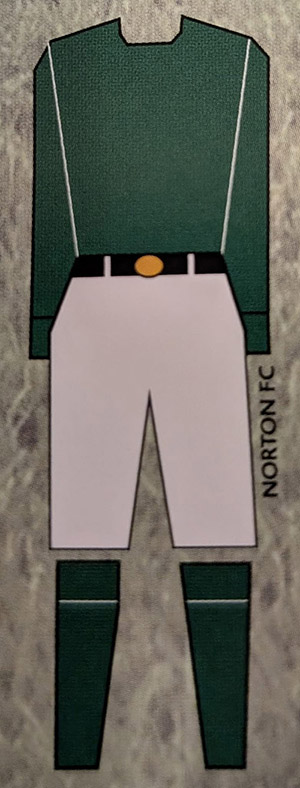
‘There were selected six young men of Norton, dressed in green and six young men of Sheffield dressed in red. The play continued for three consecutive days at the arch that was erected at the ground. Those on the Norton side, not being so numerous as those of Sheffield, sent messages to the Peak and other places in the county of Derby. Then those of Sheffield sent a drum and fife band through the streets of Sheffield to collect more recruits. The fashion then was that all respectable gentlemen of Sheffield, tradesmen and artisans of Sheffield should wear long tails, hence that at the close of the third day’s play a general row or struggle took place between the contesting parties. The men of Derbyshire cut and pulled off nearly all the tails from the heads of the gentlemen of Sheffield’.
The earliest report of folk football in the Sheffield area is a reminder that it was a completely different entity from the first rules based ‘modern’ football that emerged in Sheffield from 1857. Although the mass exodus from the rural counties that bordered the West Riding into Sheffield was consequential; seeding the city with young men who shared a passion for early forms of football.
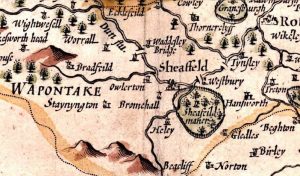
Norton, probably named as a northern settlement linked to Chesterfield, lies four miles south of Sheffield City Centre. Originally a village in Derbyshire, it was transferred to the City of Sheffield in two parts in 1901 and 1933. The ancient boundary of Yorkshire and Derbyshire evolved from the boundary of warring Saxon kingdoms, Norton as part of Mercia probably retained animosity to the Northumbrians a few miles north.
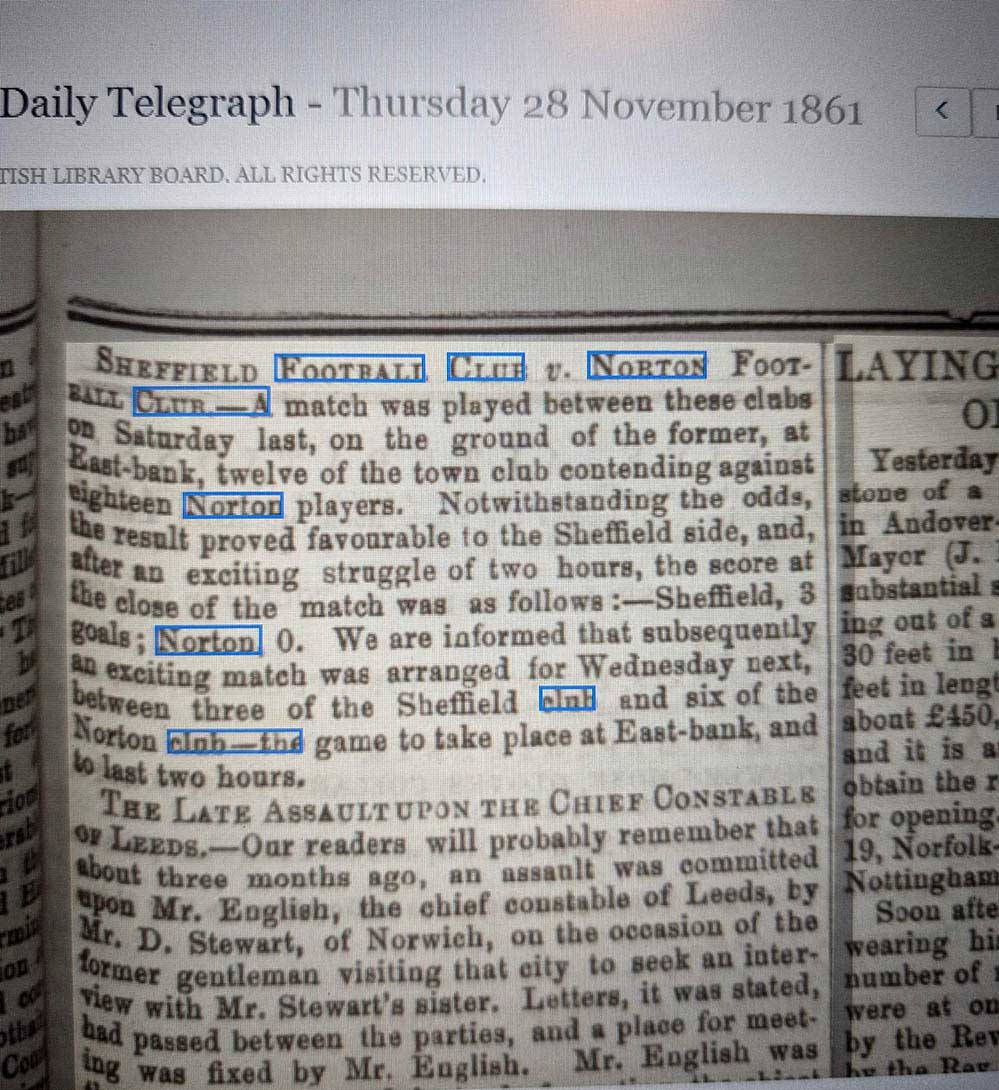
The club almost certainly originates from the cricket club associated with the original Cross Scythes pub. The landlord, George Barker, opened a cricket ground just across from the pub on the far side of Norton Lees Lane. The football club retained a link to the pub when it moved to Oakes Park in the 1850’s, holding meetings there, and the club used George Lister’s field on Derbyshire Lane for Athletics events in the 1870’s. The football club was formed in 1861, playing an away game against Sheffield FC in the same year. Derbyshire and Yorkshire rivalry, and the old Norton/Sheffield rivalry dating back to the 18th century ensured that their game against Hallam (once the southernmost shire of Northumbria) was imbued with a special intensity for the Youdan Cup tie between the teams in 1867. Norton had progressed with a convincing win over United Mechanics.
After two and a half hours of excitement on the Oakes Ground, neither team had forced an advantage, and the eagerly awaited replay attracted a crowd estimated at around 3,000 spectators. Norton pushed the eventual winners hard and only a solitary rouge forced their elimination. Norton, a club of gentlemen and yeoman farmers, retained a Derbyshire identity alongside many early Sheffield Association teams, although they could not match the prowess of neighbouring Heeley who won the Derbyshire cup and Dronfield who were the best team in the Sheffield region for a season. They did play many games against Derbyshire sides and E. Shaw represented the Derbyshire County team against the town of Derby in 1873.
Whilst they do not appear to have contributed to the melting pot of tactical innovation in the 1860’s and 1870’s they were affiliated with some notable early players including Butterly, Linley and Warburton. Their outstanding contribution to football history is helping to attract a crowd of 3,000 in 1867-a crowd larger than that of any cup final before 1878. They disappeared with the dawn of the hybrid amateur/professional era. A separate club from the area, Norton Woodseats would reach the semi-final of the amateur cup. Sir Nathaniel Creswick lived at Norton Green, Maugerhay, in later life.