
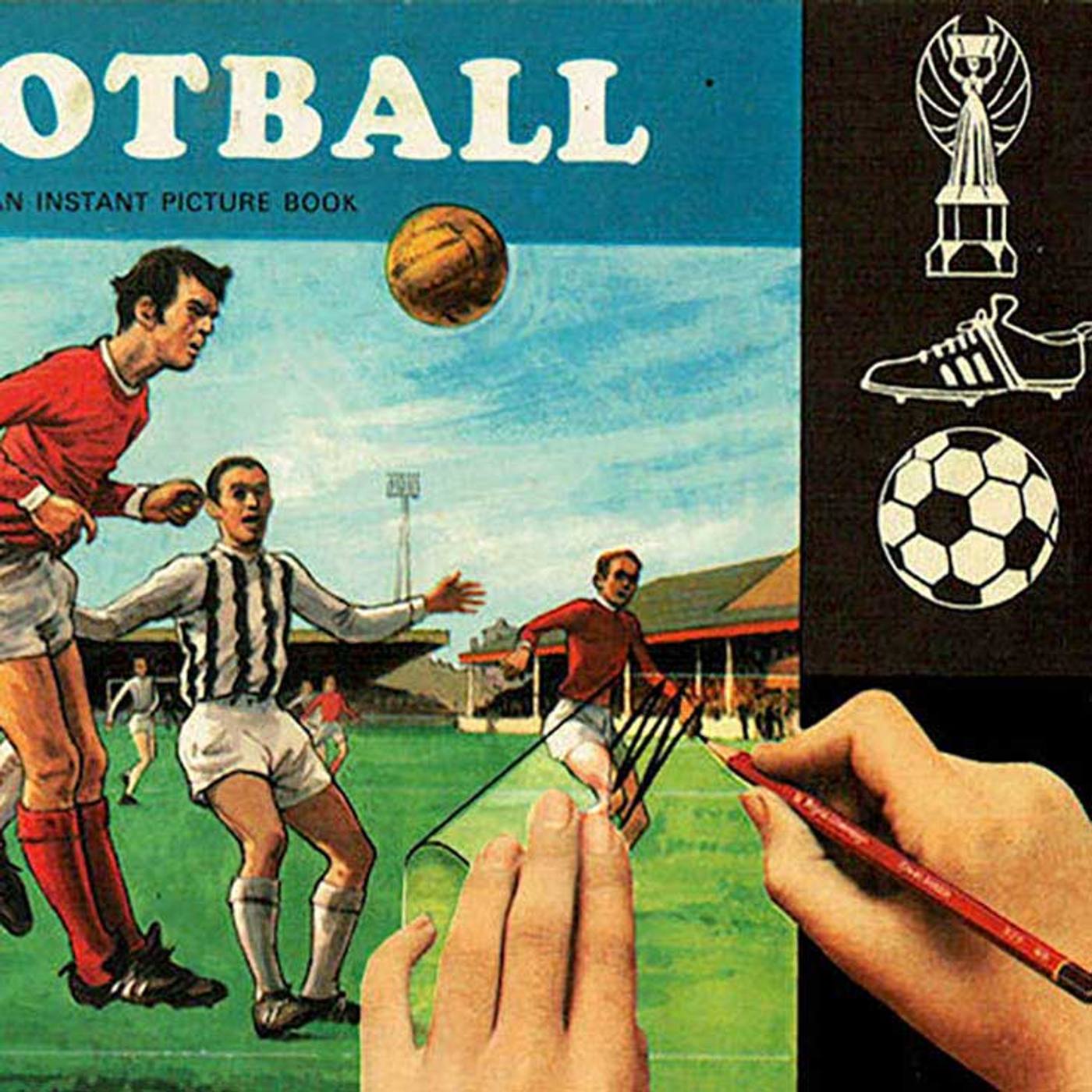
Instant Transfer Football
Readers of more advanced years will remember “Letraset”, formed in 1959. Their revolutionary idea was to use transfers to create letters (personal computers had not been invented). They soon realised you could do the same with images and so the “Instant Transfer” phenomenon came into being. You bought a booklet devoted to a topic such as aircraft, dinosaurs, or football. This included transfers and empty “scenes” to move them onto. You could created authentic panoramas with little skill. You could also create comic scenes that lacked any sense of reality!
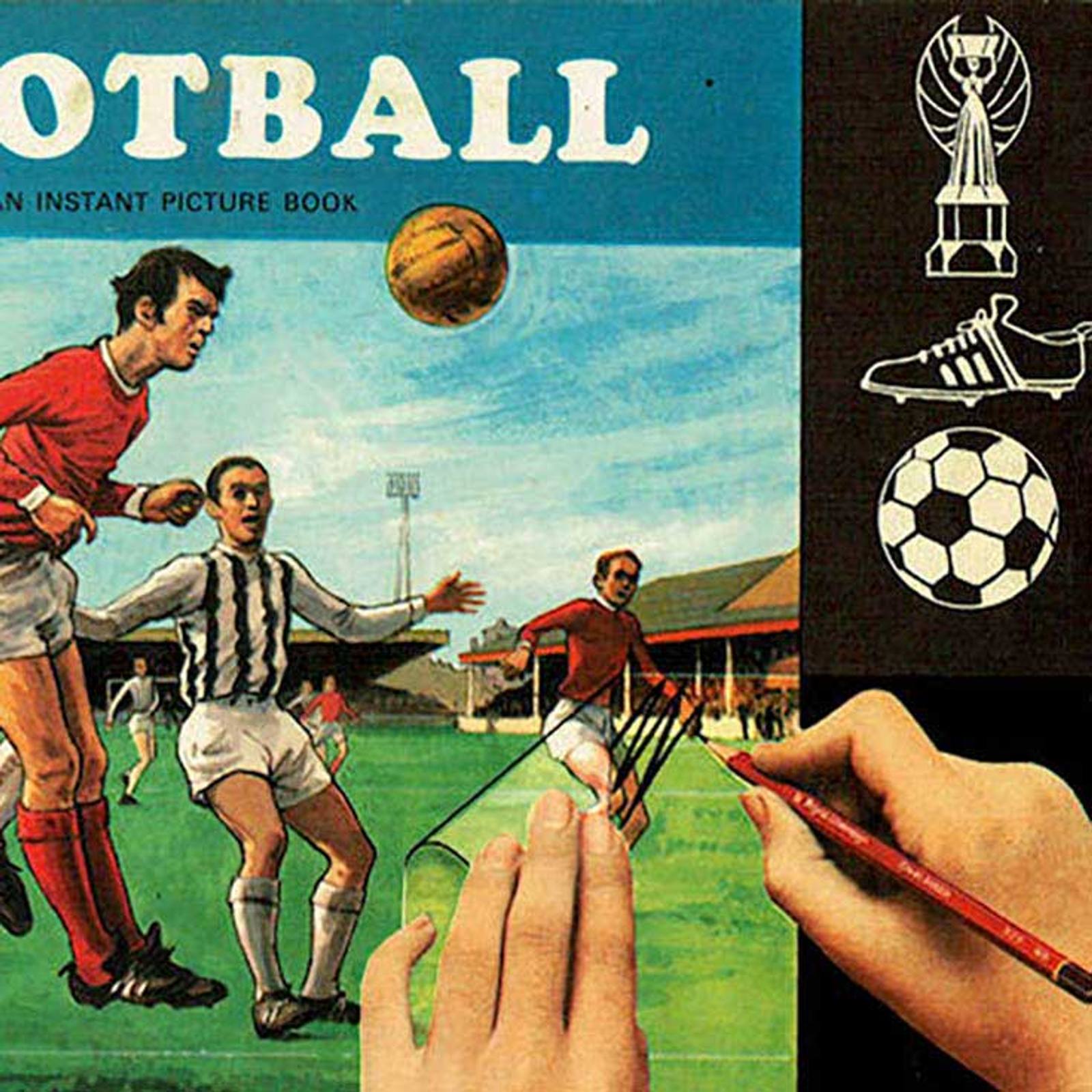
In late 1969, Patterson Blick produced the first series of Instant Picture Books. The books were compiled by Dennis Knight, illustrated by Ralph Bruce. Number 24 in the series is entitled ‘Football’. It includes 10-pages of text on football, and a double-page inside spread and inside back cover for kids to apply the transfers provided.
Their books included a history of the game, objects of the game, basic rules, tactics, goalkeeping and fouls / free kicks. You had three sides of scenes to apply the transfers to. They cost £1 when first released. Good condition books now fetch over £100, even more if the transfers have not been used.
Letraset’s first foray into the football collectables was in 1971 with “Soccer Action Replay”. A set of 24 Action Transfers where you received a set of transfers and a ‘scene’. The scene was printed in the middle of a fold-out paper folder, and you were supposed to apply the transfers in order to make up the specified action replay e.g. a hand ball or a brilliant header. As well as featuring an action replay each item featured a top player, with an image of that player which could be rubbed onto a space in the folder.
“Soccer Action Replay” was a second English set from Letraset, similar to the first. It still gives you a scene, though this time the transfers are from a specific game e.g. 1971/72 F.A. Cup Final. Instead of providing a transfer of a top player you only get two ‘Star photos’. Most of the scenes featured in this set are from the 1971/72 season.
By the mid 80s, the concept was losing commercial interest. The arrival of the Apple Mac means that Instant Lettering was quickly replaced by computer typography and became a thing of the past. Letraset responded by converting many of their typefaces into digital formats. Having gone into receivership in 1983, Instant Transfer’s owner Thomas Salter’s assets were finally sold to Peter Pan Playthings of Peterborough in 1985. They only lasted a few months before going bust themselves.
Do you have more information about this that we could add? Are any of the facts wrong? Please get in touch if so.
Source: Nick Robinson