
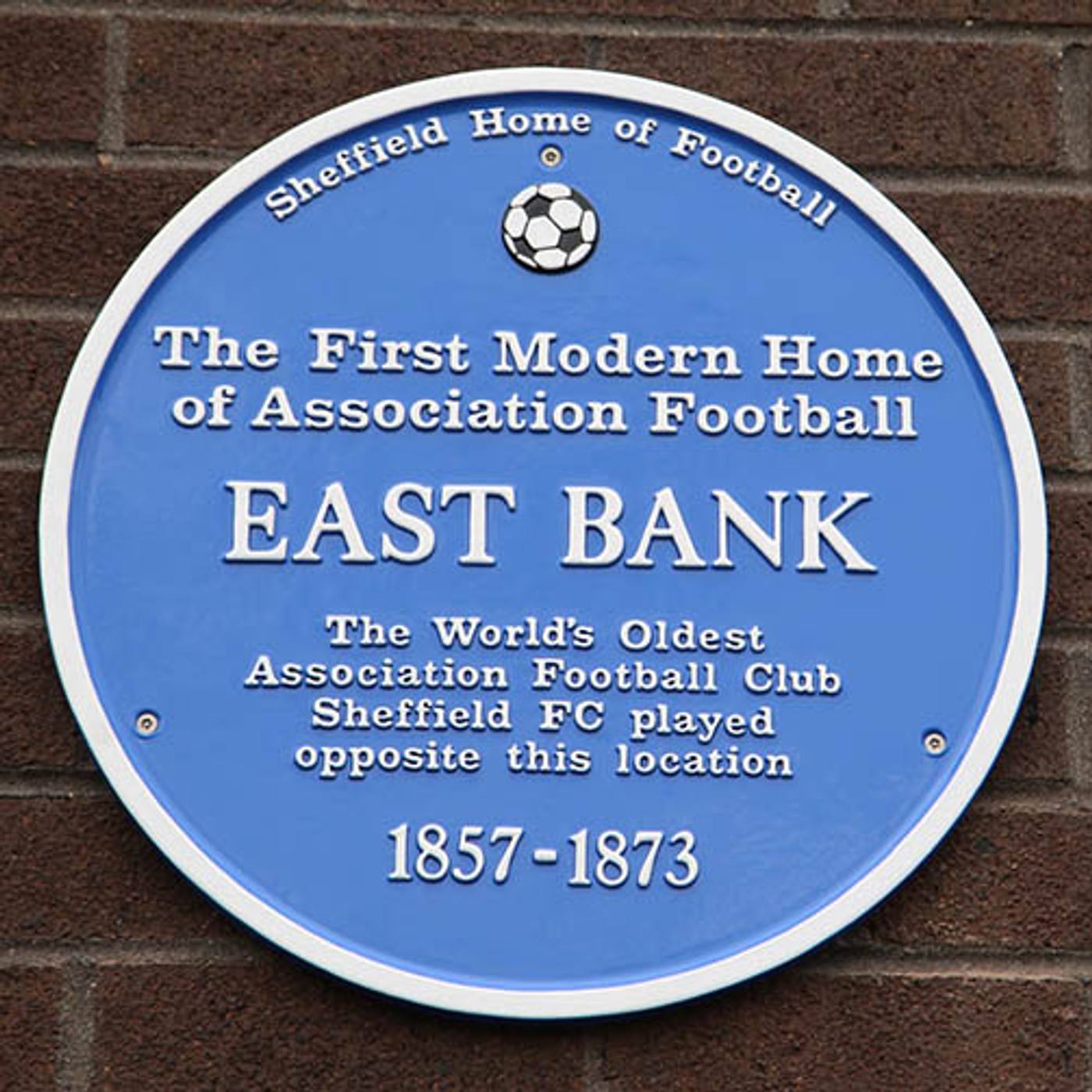
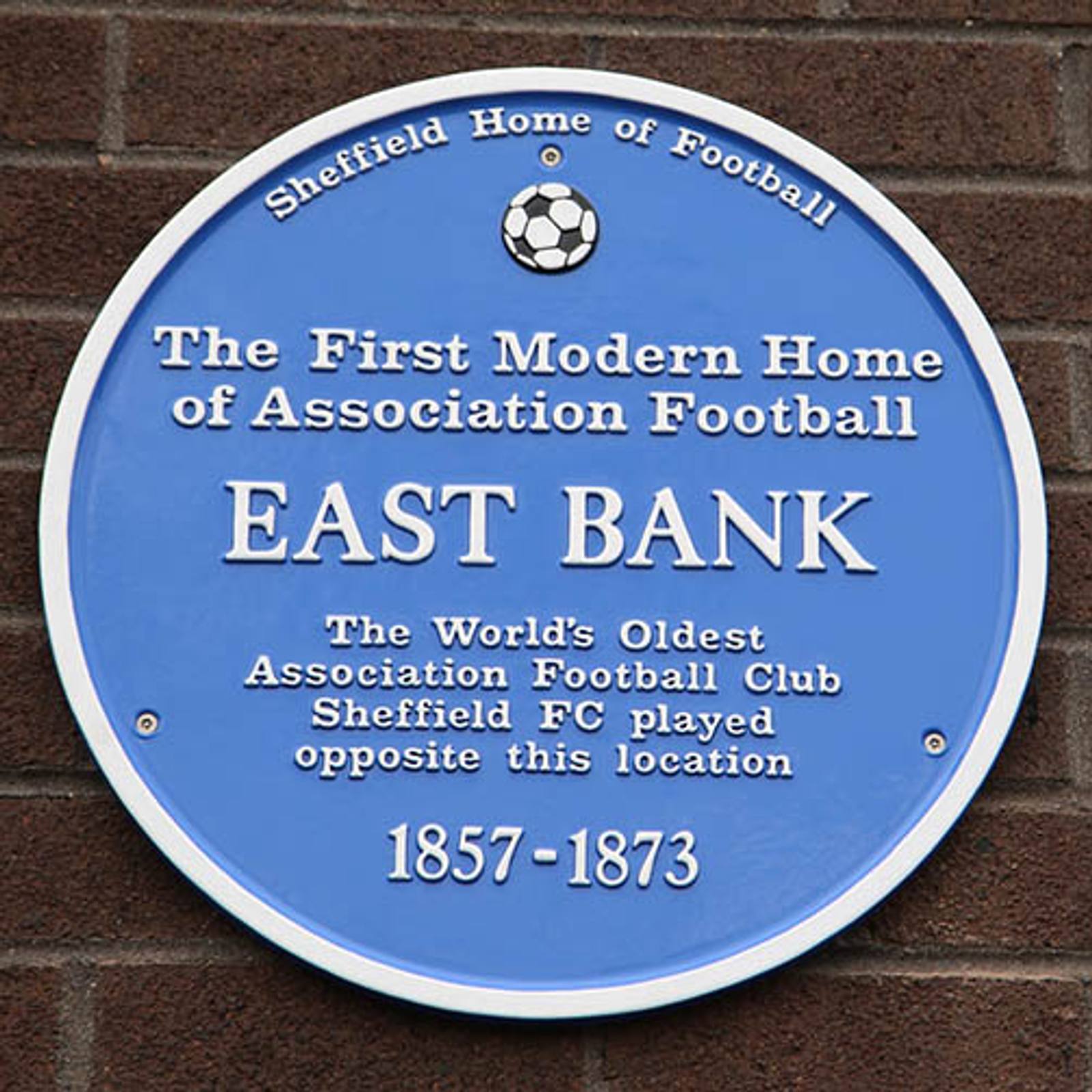
East Bank holds a unique position in football history as the first playing ground of the world’s first modern football club. After Sheffield FC had been formally established in 1857, matches were played in the open fields at East Bank just south & west of Park House in southern Sheffield. This site became the earliest known ground used consistently for organised association football, making it the first football ground in the modern sense. Here, football moved beyond occasional recreation and began to take shape as a structured activity played in a defined location.
Two pitches evolved at East Bank. The top pitch just south of Park House had a steeper gradient but was likely less “boggy” than the lower pitch to the west closer to the River Sheaf. This meant that the top pitch was used more during wetter winter months. In 1860 a new clubhouse was built near to the lower pitch along Strawberry Hall Lane making it the main playing area. After the construction of the railway had started in 1869 the top pitch would have been much less accessible & likely abandoned.
At East Bank, the earliest versions of association football were tested under agreed rules. At first in-house members matches were regularly played. With the development of multiple other organised Sheffield clubs East Bank also witnessed early inter club matches. Spectators gathered to watch. Football was no longer solely about participation, but about observation and shared experience. The presence of crowds introduced pressure, expectation, and debate, helping shape how the game was played and understood. The closeness between players and spectators created an intense atmosphere that embedded football deeply within Sheffield’s social life.
Today, the main pitch where modern football history was first made has been absorbed into the modern cityscape and is now mainly the site of a B & Q store car park. The contrast between its present-day use and its historical significance could hardly be greater. Yet beneath the concrete and commerce lies the birthplace of organised football. The blue plaque at East Bank ensures that this transformation is not forgotten, marking the site as ground zero for modern football and reminding us that the world’s most popular sport began on an unassuming patch of ground beside the River Sheaf.
Back to the Plaque listing