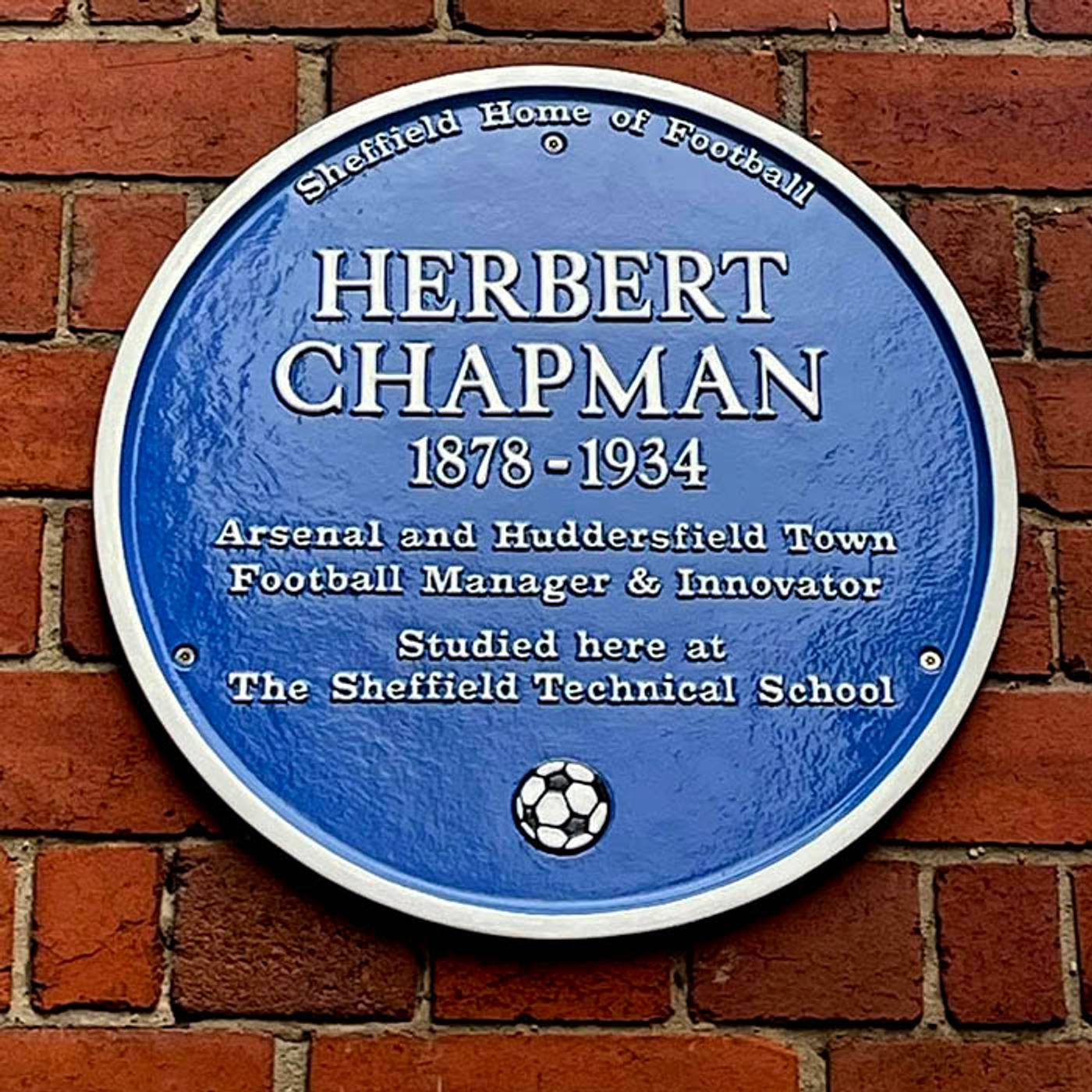
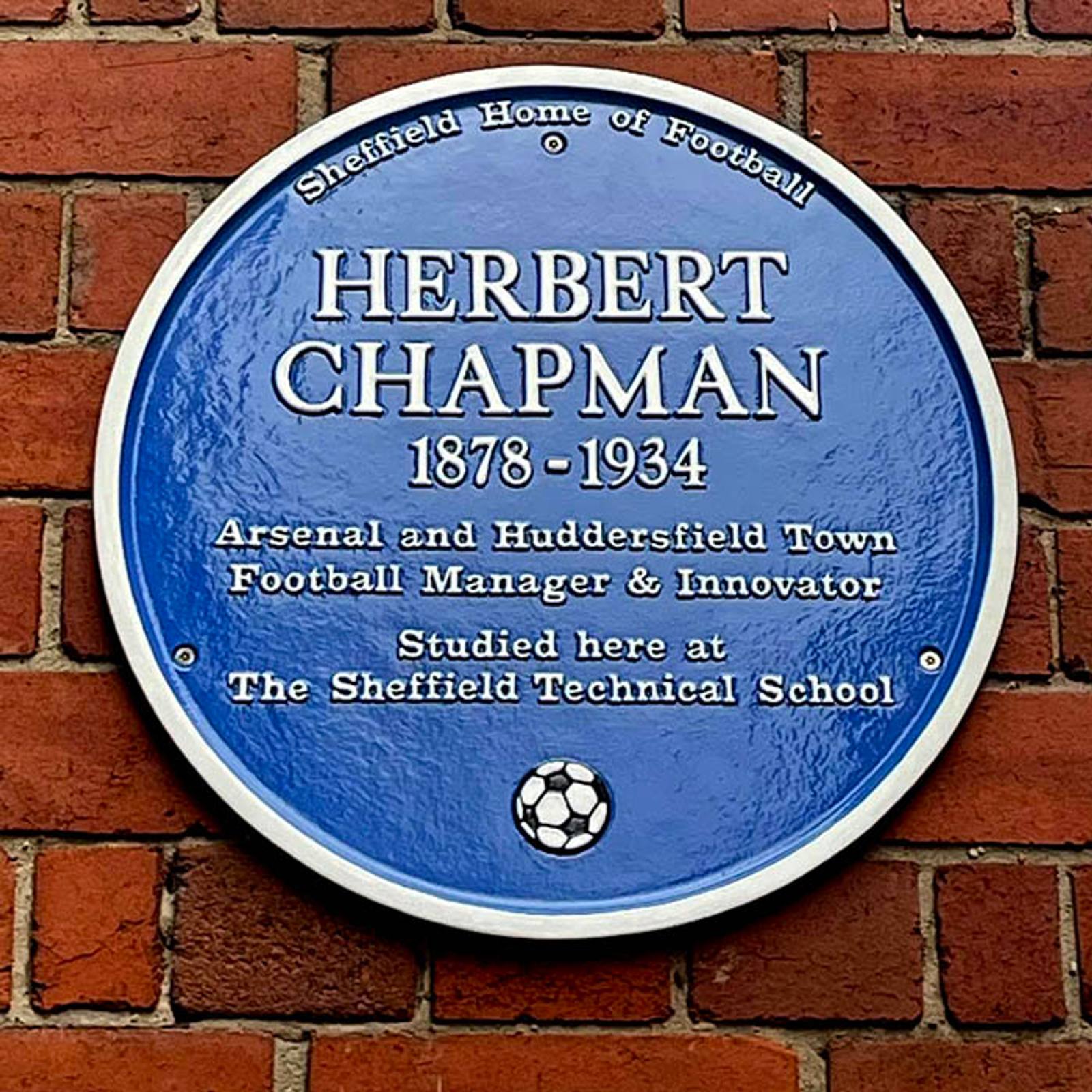
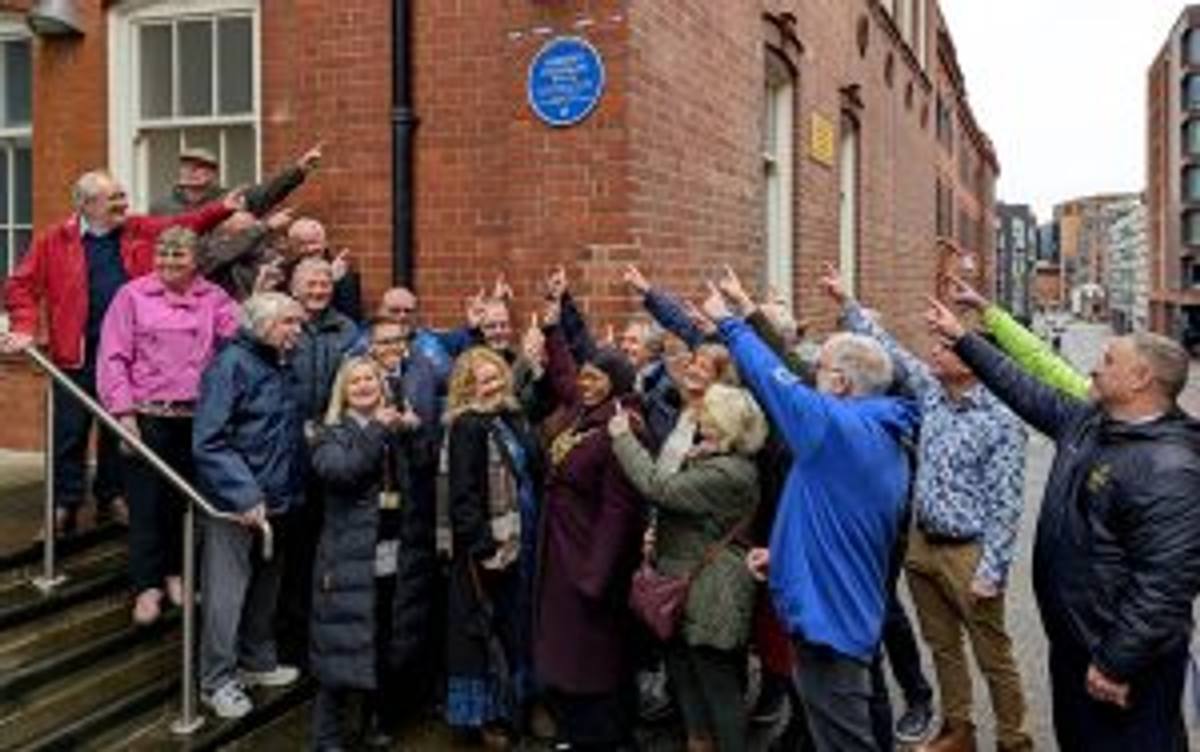
Herbert Chapman is widely regarded as one of the greatest football managers of all time-and arguably the greatest says historian John Stocks, a trustee of the charity, Sheffield Home of Football, which has erected 11 blue plaques in the city over the last two years.
‘Only his fellow Yorkshireman, Brian Clough, can match his achievement of winning top -flight titles with separate clubs, and Clough had Peter Taylor by his side, Herbert did it twice at both Huddersfield and Arsenal’, says John. Like Clough, he did not manage clubs that were already acknowledged as being great. He did not join a club like Manchester United which had already established themselves as deities of the football pantheon when Alex Ferguson took over,’ explains John.
‘Herbert Chapman was an alchemist. He transformed two ordinary teams into giants of the English game. Huddersfield and Arsenal had greatness thrust upon them by his managerial genius’. ‘Chapman was born in Kiveton, (Now called Kiveton Park & Wales) in Rotherham, a village that has produced 30 first class professional footballers, fine cricketers and a world super-bike champion, James Toseland’. ‘Like Sir Matt Busby, Bill Shankly, Sir Bobby Robson and Jock Stein, he was part of a coal mining community and worked at the pit as a young man.’
‘Both he and his brother Harry, a hugely successful football player who won back-to-back top-flight titles and an FA Cup with Sheffield Wednesday, played football in Kiveton and at Worksop Town.’ ‘Winning two league championships with Huddersfield town remains an astonishing achievement and Arsenal fans acknowledge that Arsenal were underachievers until Chapman took over.
‘In the early 1920’s London football was consistently struggling to compete with the footballing powerhouses of the North and Midlands’ ‘Herbert Chapman stopped the rot and made Arsenal into a team to be respected, even grudgingly admired, across the United Kingdom.’ ‘He created a team of entertainers. In the 1930-31 season Arsenal’s final total of 66 points (in the two points for a win era) was the highest any team had ever recorded at that time, and Arsenal’s incredible tally of127 league goals remains a club record’.
‘It was the first time a London side, or any side from the South of England had won a football league title. A diligent student of the world game, who organised friendlies against European opposition, had he been born in a different era he would certainly have won European Cups, enthuses John.
‘It was his commitment to the greatest tactical innovation of the era, the W-M, facilitating deep lying centre halves and mobile inside forwards, which enabled the modern game, focused on passing and swift counter attacking to emerge. Herbert Chapman’s vision and attention to detail delivered new levels of physical fitness on the pitch and administrative innovations such as floodlighting, white footballs, and electronic scoreboards-the holistic approach even stretched to the renaming of a local tube station as Arsenal. Herbert Chapman was not just a football manager; he was a remarkable human being. When I visited Hendon recently for a commemoration of the100th anniversary of him joining Arsenal, I saw how his memory is cherished in his adopted home. In Hendon he was a community leader, a committed Christian who would be seen handing out hymn books at morning and evening services the day after his greatest triumphs.
As a player he was coached by the first Black professional footballer, Arthur Wharton and as a manager he signed the great Walter Tull. He was known as a great friend of the beleaguered Jewish community in Hendon during difficult periods of racial tension.